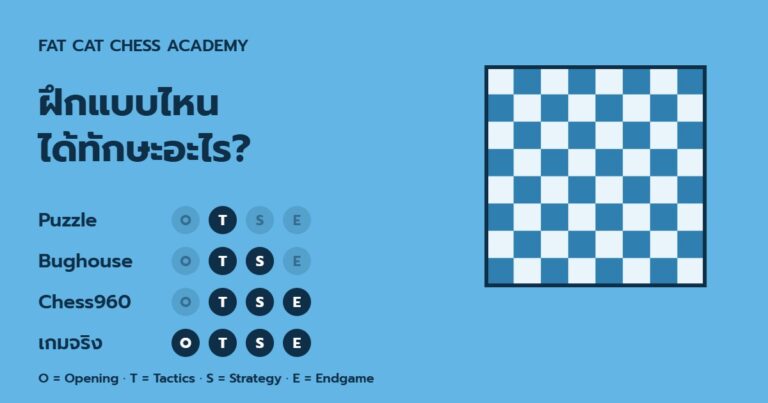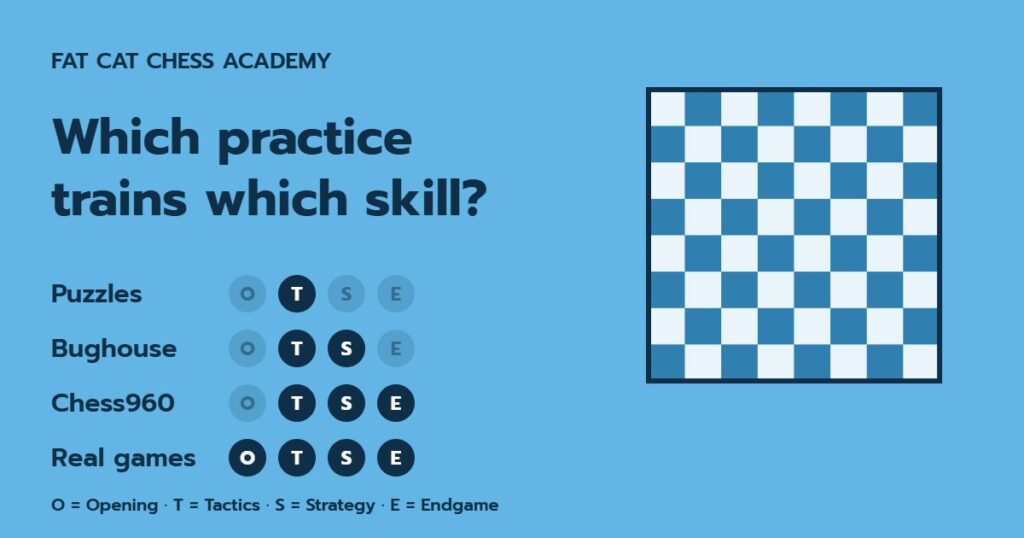
Short answer: chess has four core skills: the Opening, Tactics, Strategy and the Endgame. Each way of practising trains different ones. Puzzles train Tactics, Bughouse trains Tactics and Strategy, Chess960 trains Tactics, Strategy and the Endgame, and playing regular chess trains all four.
| Practice format | Opening | Tactics | Strategy | Endgame |
|---|---|---|---|---|
| Puzzles | ✓ | |||
| Bughouse | ✓ | ✓ | ||
| Chess960 | ✓ | ✓ | ✓ | |
| Regular chess | ✓ | ✓ | ✓ | ✓ |
The four core chess skills
- Opening: developing pieces quickly, controlling the centre and getting the king safe.
- Tactics: spotting short, forcing ideas such as forks, pins, discovered attacks and checkmates.
- Strategy: long-term planning: where each piece belongs, when to trade and which side of the board to play on.
- Endgame: turning an advantage into a win, or holding a draw, when only a few pieces are left.
Puzzles: Tactics
A puzzle is a position taken from a game where the player must find the best move, such as mate in two or a move that wins material. Solving puzzles regularly helps children recognise tactical patterns faster and calculate more accurately.
The limit is that a puzzle tells you a winning idea exists. In a real game nobody tells you, and there may be no winning idea in the position at all. Most puzzles also do little for strategy and long-term planning. Fat Cat Chess Academy runs CMP & Puzzle classes for exactly this kind of practice.
Bughouse: Tactics and Strategy
Bughouse is a 2-versus-2 team game played on two boards at once. Pieces you capture go to your partner, who can choose to drop them onto an empty square on their own board. Games are fast and full of attacks.
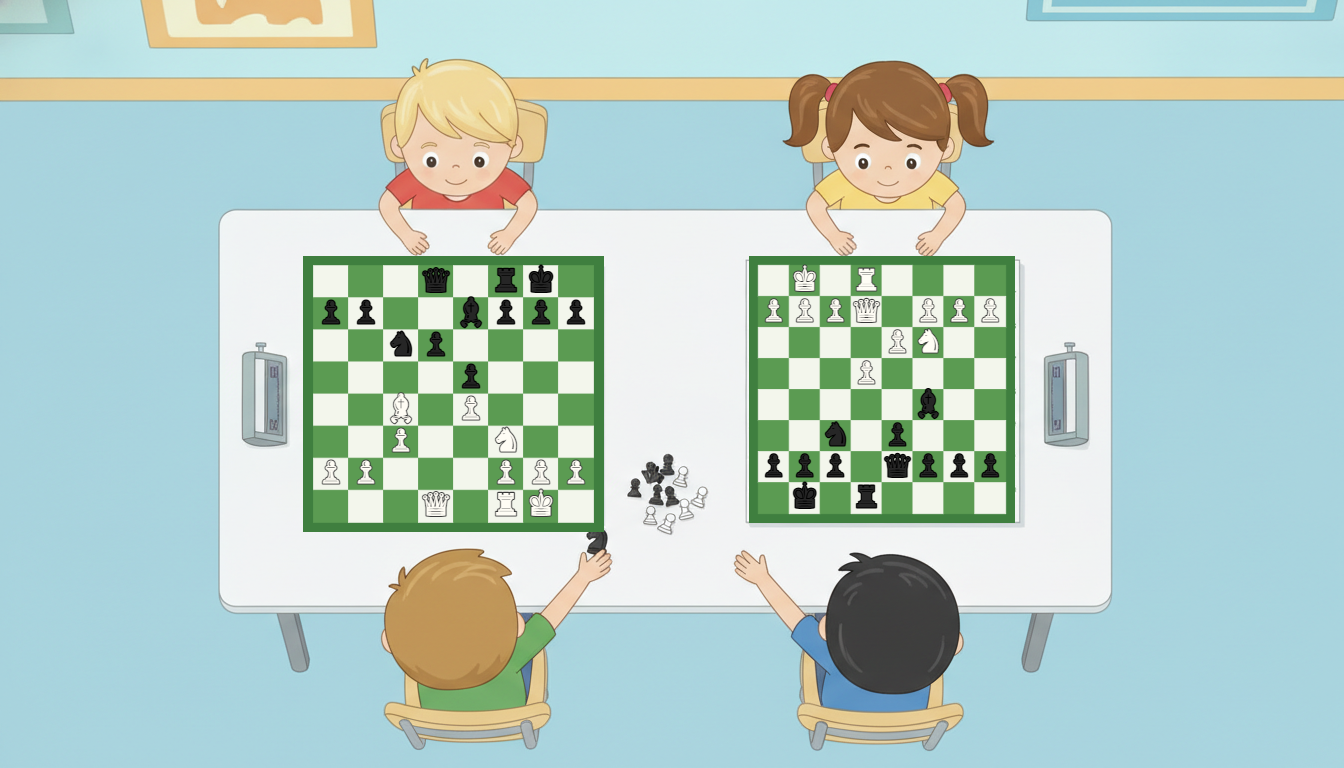
- Tactics: the game changes very quickly because attacks come almost constantly, so players must spot every threat in advance and respond efficiently, which makes it intense tactical training.
- Strategy: choosing where to drop a piece needs strategic understanding, for example which colour square a bishop belongs on or which zone of the board suits a knight. Players also have to think about their partner’s board: which pieces to trade and when, when to speed up or stall, and which pieces to keep for defence in case the opponents collect pieces for a heavy attack.
Bughouse usually does not train the endgame, because new pieces keep being dropped onto the board and the positions after the opening are very different from normal chess. The academy holds a Friendly Bughouse event regularly.
Chess960: Tactics, Strategy and Endgame
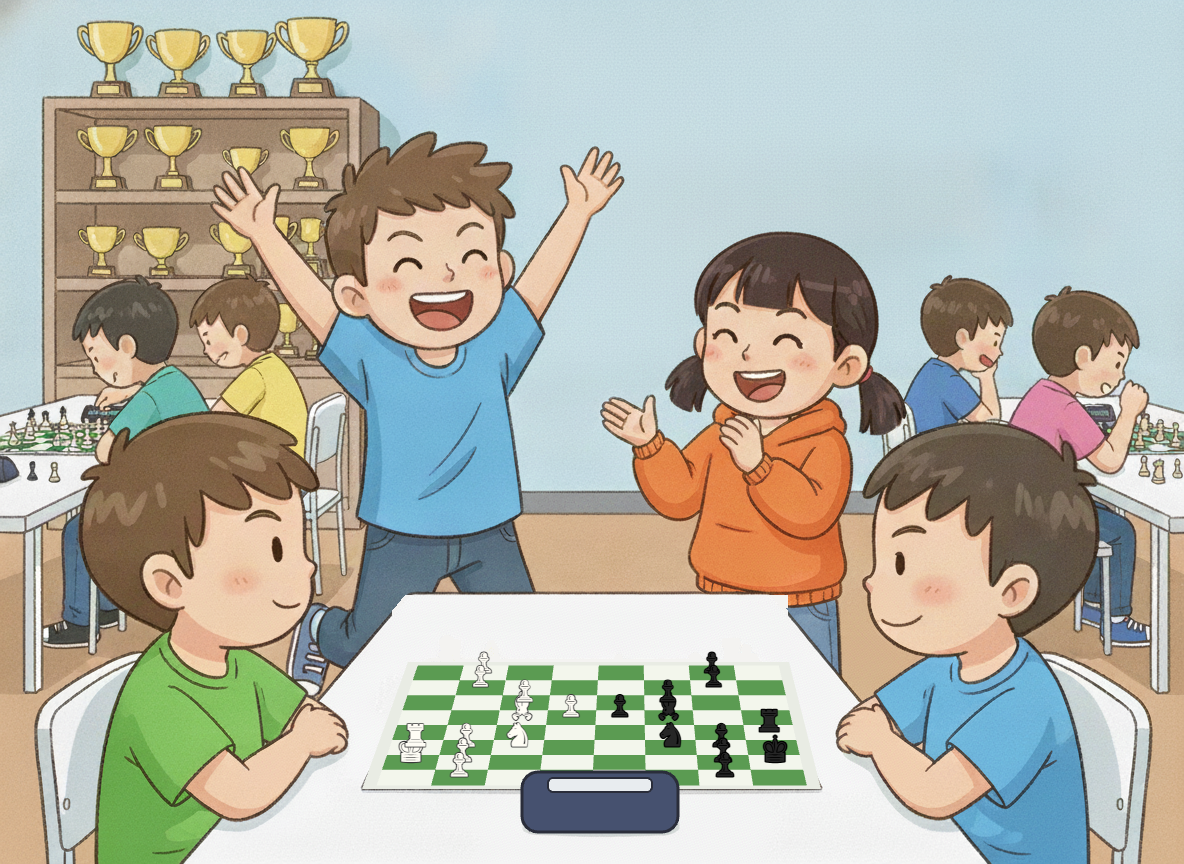
Chess960 (also called Fischer Random) uses the normal rules, except that the pieces on the back rank are shuffled, with White and Black mirroring each other, giving 960 possible starting positions. Almost all researched opening lines no longer apply, so players must think from principles from the very first move.
- Tactics and Strategy: almost all middlegame positions are ones nobody has seen before, so players must find their own strategic plans and calculate tactics themselves.
- Endgame: once pieces are traded off, the endgame is exactly the same as in normal chess, so endgame knowledge is fully used.
Regular chess: all four skills
Playing full games of regular chess is the only practice that covers the Opening, Tactics, Strategy and the Endgame together, but it does not focus on any single skill.
The academy runs internal tournaments and the FIDE-rated Caturayuth series so students get to play regular chess often. See the tournaments page.
What should parents choose?
- Solve puzzles regularly, especially if tactics are a weak point: even a few a day sharpens tactical vision.
- Play real games often: it is the only format that trains every skill.
- Add Bughouse for players who are weaker in tactics and strategy: it is also fun and trains teamwork and independent thinking without memorisation.
- Consider Chess960: to train the skills other than the opening.
Frequently asked questions
Are puzzles alone enough?
No. Puzzles train tactics well, but not openings, planning or endgames. Children also need to play regular chess.
Can beginners play Bughouse?
It is best to be comfortable with normal chess first, because Bughouse adds drop rules on top of the normal rules and is much faster.
Who is Chess960 for?
Students who already know opening principles and want to practise thinking for themselves instead of relying on memorised openings.